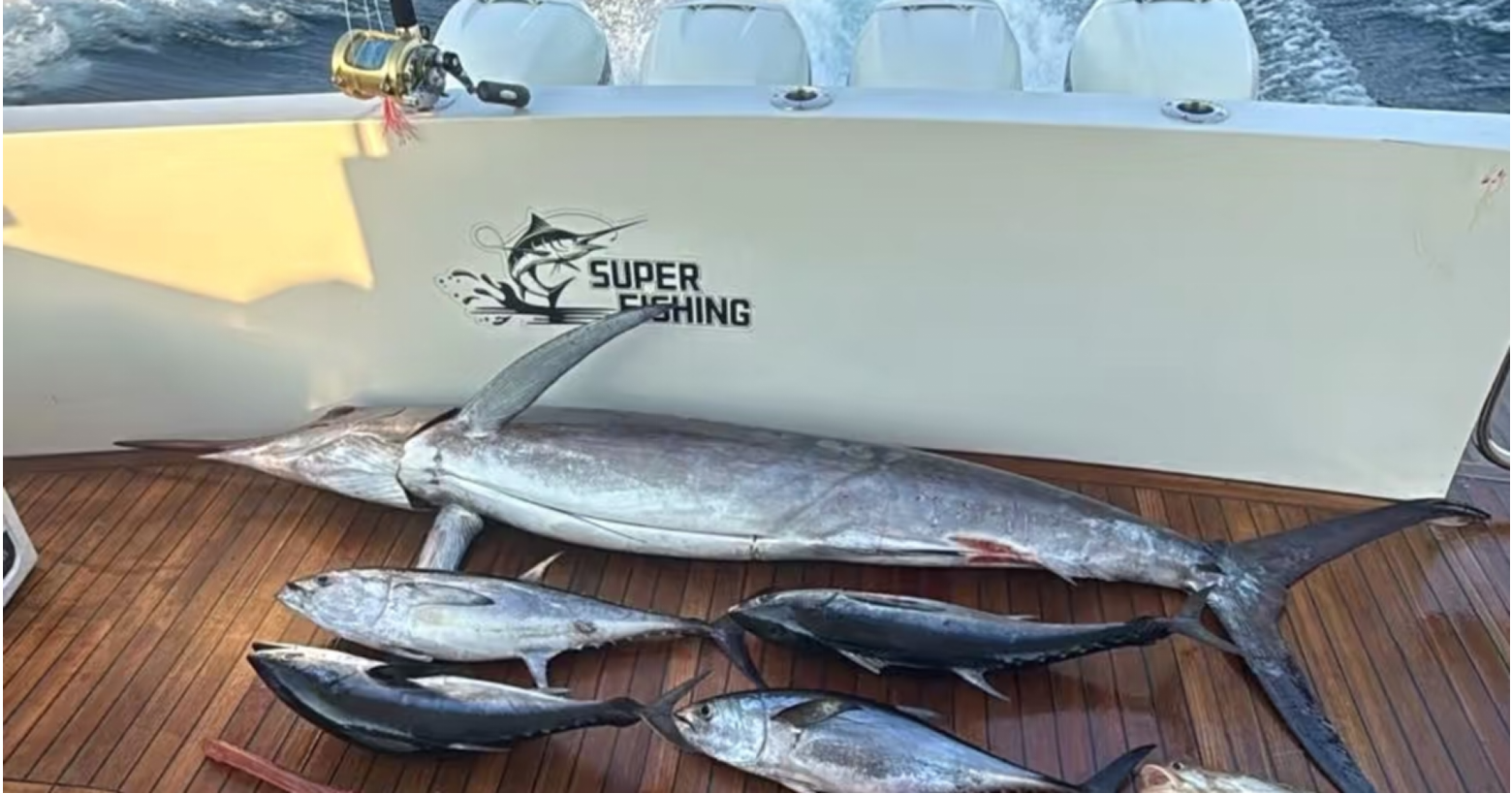
Super Fishing: one schedule to save the chaos during peak season
The operator
Super Fishing runs fishing charters out of Fujairah, on the UAE's east coast. What started as one boat is now a fleet of more than ten, with twelve people on the payroll: a store manager, one salesperson, captains and deckhands, and a Chinese-speaking guide.
The season runs from October to April. In peak months the dock is busy from first light and the phone does not stop. In summer the boats still sit in the water, the crew still draws a salary, and the company carries the cost of both.
Most guests are repeat customers and referrals. The rest arrive through Xiaohongshu and Meta ads. The team has looked at marketplaces as well, but the paperwork is heavy and nobody has time for it in season.
Before: a business held together by memory
Ask the manager what a normal morning looked like, and the answer is a sequence of phone calls.
A booking comes in on WhatsApp. The salesperson needs to know whether a boat is free, so she asks the manager. The manager checks a notebook, then a memo on her phone, then a message thread from two weeks ago. Eventually there is an answer — usually right, sometimes not.
The order is then written down two times. Once by hand on a sheet: boat, time slot, guest, amount. Once again in a message to the finance team at group level, because they keep their own record.
At the dock, the guest count on the booking is often not the guest count on the boat. Three booked, six arrive. Eight booked, five show up. The real number goes out over WhatsApp, because there is nowhere in the system to put it.
In the evening, before the day's takings are banked, someone counts the cash by hand. Highlighter on paper, calculator on the desk, then added to card receipts and bank transfers. It is not that the accounts are a mess — the group has a finance team and a proper monthly close. It is that the same day's work has to be assembled from four places before anyone can see it.
The breaking point
None of this was chaos. It was a business running on memory and chat threads, and for a few boats it worked.
It stopped working when the fleet grew. One person can hold five boats in her head. Beyond that, the questions arrive faster than the answers: which boat is out, who confirmed what, what was collected, who is still owed.
Peak season made it worse, because that is exactly when there is no time to stop and check. The work that got dropped first was the work that did not shout — following up with past guests, for example. Nobody noticed until the season ended.
What they tried
Excel. A shared notebook. A group chat per boat. Hiring more people.
Each solved part of the problem and added another place to look. The spreadsheet could hold numbers but not availability. The chat could hold a conversation but not a schedule. New staff learned the routine in a week and still made errors on amounts, because the amount was copied from a message and the message was not always right.
The team also tried the third-party marketplaces, and still has listings in progress. The obstacle there is not willingness but paperwork: applications, documents, approvals — all of it landing in the busiest weeks of the year.
What they needed
Two things, in the manager's words: to see clearly every day, and to have the schedule somewhere other than a chat history.
Not forecasts — the owner already knows how the season will go. Not a CRM, and not a new sales channel. What was missing was the current state of the business: which boats went out today, which stayed in, what came in, what is still owed.
How it was set up
The first step was not software configuration. It was writing down how the business actually runs: the boats, the trip lengths, the packages, the add-ons, who is allowed to confirm a booking.
Each boat went in with its own schedule and capacity. Packages were rebuilt as they are sold — four-hour near-shore trips, full-day trips, private charters and shared departures. Orders were set up so a salesperson could pick a saved package, adjust it, and confirm in one screen.
The store manager was the first user, not the last. She checked that the schedule matched what she knew to be true before anyone else was asked to trust it. The salesperson learned it in an afternoon; the crew only needed to see the day's list.
Then the old records were left alone. The point was not to migrate history, but to make the next booking go in once.
After: the same day, seen from one screen
The morning question now has a screen. Which boats are out, which are free, what is confirmed for tomorrow.
The salesperson prices a trip, checks availability and confirms without walking over to ask. When the guest count changes at the dock, it is recorded against the order instead of sent as a message.
The evening count starts from a list. Cash, card and transfer are already sorted by the way they came in, so the highlighter and the calculator are only for checking, not for assembling.
And because the schedule is shared, "is this boat free on Friday" has an answer that does not depend on who is on shift that day.
In their words
"Before, I was the schedule. If I was not there, nobody really knew what was happening with the boats. Now the schedule is there whether I am or not, and the girls can answer a customer without coming to find me. That is the part I would not give back."
— Una, store manager, Super Fishing
What is still on the list
Some of the dock's routines are not software problems yet, and the team knows it.
Engine hours are still reported over WhatsApp. Boat licences come up for renewal and rely on a captain's memory. Guests who arrive in different numbers than booked are still handled by message, even though the number is now recorded.
The marketplace listings are still half-finished. The difference is that the schedule and the order now live in one place, so the rest has somewhere to attach to.
At a glance
| Business | Fishing charters, private and group trips |
|---|---|
| Location | Fujairah, UAE |
| Fleet | More than ten boats |
| Team | 12 people: manager, sales, captains and crew, guide |
| Season | October to April |
| Before | WhatsApp, a notebook, Excel, and three handwritten records per order |
| Now | One schedule, one order record, one place for what was collected |